
How to Tell if a Tree Is Structurally Unsafe Before It Falls
Trees add beauty, shade, and value to any property, but not every tree remains safe throughout its lifetime. While some warning signs are obvious, others can go unnoticed until a branch breaks or the entire tree falls. A structurally unsafe tree can damage homes, vehicles, fences, power lines, and even put people at risk.
Knowing what to look for can help you take action before a minor issue becomes a major hazard. In this guide, Northern Tree Services explains the common signs of structural weakness, why professional inspections matter, and when it’s time to consider Tree Removal Adelaide services.
Why Tree Stability Matters
A healthy-looking tree is not always a safe tree. Internal decay, damaged roots, and structural defects often develop long before visible symptoms appear. Severe weather, strong winds, heavy rain, prolonged drought, and ageing can all weaken a tree over time.
Regular inspections are especially important if your property has large or mature trees close to buildings, driveways, or public areas. Identifying problems early can help avoid costly repairs and improve the safety of your home.
Warning Signs That a Tree May Be Structurally Unsafe
1. Large Cracks in the Trunk
Deep vertical or horizontal cracks in the trunk often indicate that the tree’s structural integrity has been compromised. These cracks may allow moisture and pests to enter, accelerating internal decay.
If a crack continues to widen or extends through a significant portion of the trunk, it should be inspected by a qualified arborist as soon as possible.
2. Leaning More Than Before
Many trees naturally grow at a slight angle, but a sudden lean or an increasing lean over time can signal root failure or instability.
Pay attention if you notice:
- Newly exposed roots on one side
- Soil lifting around the base
- A noticeable change in the tree’s position
These are signs that the tree may no longer be securely anchored.
3. Dead or Hanging Branches
Large dead limbs are one of the most common causes of property damage during storms. Branches without leaves during the growing season, brittle wood, or limbs that are already broken but still attached should never be ignored.
Professional pruning may solve the problem, but if the tree has widespread deadwood, complete Tree Removal Adelaide may be the safest option.
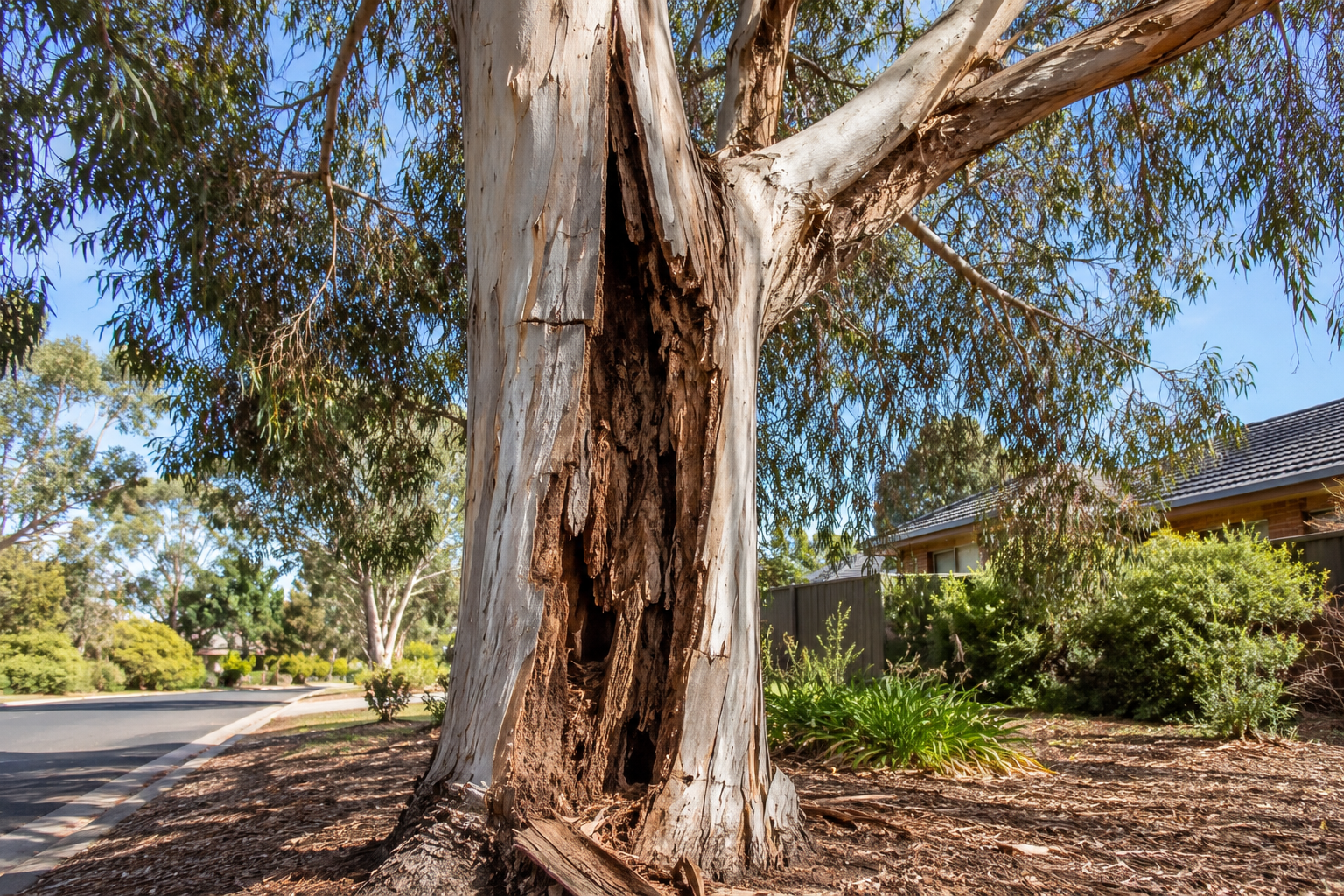
4. Hollow or Decaying Trunk
A tree does not need to be completely hollow to become dangerous. Cavities, fungal growth, or soft, crumbling wood often indicate internal decay that weakens the trunk from the inside.
Common warning signs include:
- Mushrooms growing at the base
- Large hollow openings
- Soft or rotten wood
- Peeling bark exposing decayed timber
An experienced arborist can assess how much sound wood remains and recommend the safest course of action.
5. Root Damage
Healthy roots provide the foundation that keeps a tree standing. Construction work, trenching, poor drainage, soil compaction, and disease can all damage the root system.
Signs of root problems include:
- Sparse foliage
- Reduced growth
- Cracks in surrounding soil
- Tree leaning unexpectedly
Root damage often goes unnoticed because it occurs below ground, making professional assessments particularly valuable.
6. Multiple Trunks with Weak Connections
Trees with two or more main stems may develop weak junctions known as included bark. Instead of forming a strong connection, bark becomes trapped between the stems, reducing stability.
As the tree grows larger, these weak unions become more likely to split, especially during high winds.
7. Extensive Pest or Disease Damage
Termites, borers, fungal infections, and certain tree diseases can significantly weaken wood over time. Visible insect activity, unusual holes, excessive sap flow, or widespread dieback should be investigated before the problem spreads further.
Weather Can Make Existing Problems Worse
South Australia’s weather can place additional stress on already weakened trees. High winds, heavy rain, prolonged dry periods, and extreme heat all affect tree stability.
A tree that appears stable during calm weather may fail during a severe storm if hidden structural issues already exist. Scheduling inspections after major weather events is a sensible way to identify damage before it becomes dangerous.
Why Professional Tree Assessments Are Important
Some structural defects are difficult to identify without specialist knowledge and equipment. Professional arborists assess the entire tree, including its trunk, canopy, branch structure, and root zone, rather than relying solely on visible damage.
At Northern Tree Services, experienced arborists evaluate each tree individually and recommend the most appropriate solution. In many cases, selective pruning or structural support can extend the tree’s life. However, when a tree presents an unacceptable safety risk, professional Tree Removal Adelaide services provide a safe and controlled solution.
Don’t Forget About the Stump
After removing a hazardous tree, the remaining stump should also be considered. Leaving it in place can create trip hazards, encourage pests, and allow fungal growth to continue.
Professional stump removal Adelaide services eliminate the remaining stump, helping restore usable space while preventing future maintenance problems and unwanted regrowth.
Tips for Keeping Trees Safe
Routine maintenance plays a major role in preventing structural failures. Homeowners can reduce risks by:
- Inspecting trees after severe storms.
- Removing dead or damaged branches promptly.
- Avoiding unnecessary damage to roots during landscaping.
- Scheduling regular arborist inspections for mature trees.
- Monitoring changes in leaning, bark condition, or canopy health.
Early intervention is almost always more affordable and less disruptive than dealing with emergency tree failures.
Final Thoughts
Recognising the warning signs of an unsafe tree can protect your property, your family, and your neighbours from preventable accidents. Cracks, leaning trunks, dead branches, root damage, and signs of decay should never be ignored, especially when large trees are located near buildings or public spaces.
If you suspect a tree on your property may be structurally unsafe, it’s best to arrange a professional assessment before the problem worsens. Northern Tree Services provides reliable tree inspections, expert advice, safe Tree Removal Adelaide, and professional stump removal Adelaide services to help homeowners maintain healthy, secure outdoor spaces throughout Adelaide.